

California SB 1383 is designed to reduce statewide methane emissions to combat climate change.
Article 12 of the bill defines annual, jurisdictional procurement requirements that took effect January 1, 2022.
In addition to reducing organic waste disposal 75% by 2025 through heightened recovery and reuse, these mandated procurement standards will also strengthen California’s green, self-sustaining economy. We will see an increase in new green collar jobs in the state, benefits to local communities and spaces and improvements to our soil and air quality.
CalRecycle assigns an annual procurement target to each jurisdiction based on its population. Jurisdictions fulfill their target by procuring any combination of recovered organic waste products including RENEWABLE NATURAL GAS (RNG), BIOENERGY, COMPOST and MULCH.
SB 1383 Article 12 Regulations
Update to SB 1383 procurement regulatory requirements:
Date Published: 9/19/2022
Compliance
What you need to do
Article 12 sets your procurement target using this formula:
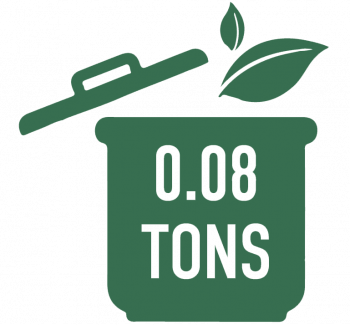
0.08 tons of organic waste per jurisdiction resident per year.
For example, a jurisdiction with 100,000 residents is required to reuse 8,000 tons of recovered organic waste annually. “Jurisdiction” means a city, county, a city and county, or a special district that provides solid waste collection services.
14 CCR § 18993.1
§ 18993.1. Recovered Organic Waste Product Procurement Target.
(a) Except as otherwise provided, commencing January 1, 2022, a jurisdiction shall annually procure a quantity of recovered organic waste products that meets or exceeds its current annual recovered organic waste product procurement target as determined by this article. For the purposes of this section, “jurisdiction” means a city, a county or a city and county.
(b) On or before January 1, 2022, and on or before January 1 every five years thereafter, the Department shall recalculate the annual recovered organic waste product procurement target for each jurisdiction according to the requirements of Subdivision (c).
(c) Each jurisdiction’s recovered organic waste product procurement target shall be calculated by multiplying the per capita procurement target by the jurisdiction population where:
(1) Per capita procurement target = 0.08 tons of organic waste per California resident per year.
(2) Jurisdiction population equals the number of residents in a jurisdiction, using the most recent annual data reported by the California Department of Finance.
(d) Annually, the Department shall provide notice to each jurisdiction of its annual recovered organic waste product procurement target by posting such information on the Department’s website and providing written notice directly to the jurisdiction.
(e) A jurisdiction shall comply with Subdivision (a) by one or both of the following:
(1) Directly procuring recovered organic waste products for use or giveaway.
(2) Requiring, through a written contract or agreement, that a direct service provider to the jurisdiction procure recovered organic waste products and provide written documentation of such procurement to the jurisdiction.
(f) For the purposes of this article, the recovered organic waste products that a jurisdiction may procure to comply with this article are:
(1) Compost, subject to any applicable limitations of Public Contract Code Section 22150, that is produced at:
(A) A compostable material handling operation or facility permitted or authorized under Chapter 3.1 of this division; or
(B) A large volume in-vessel digestion facility as defined and permitted under Chapter 3.2 of this division that composts on-site. [NOTE: Digestate, as defined in Section 18982(a)(16.5), is a distinct material from compost and is thus not a recovered organic waste product eligible for use in complying with this Article.]
(2) Renewable gas used for fuel for transportation, electricity, or heating applications.
(3) Electricity from biomass conversion.
(4) Mulch, provided that the following conditions are met for the duration of the applicable procurement compliance year:
(A) The jurisdiction has an enforceable ordinance, or similarly enforceable mechanism, that requires the mulch procured by the jurisdiction to comply with this article to meet or exceed the physical contamination, maximum metal concentration, and pathogen density standards for land application specified in Section 17852(a)(24.5)(A)1. through 3. of this division; and
(B) The mulch is produced at one or more of the following:
1. A compostable material handling operation or facility as defined in Section 17852(a)(12), other than a chipping and grinding operation or facility as defined in Section 17852(a)(10), that is permitted or authorized under this division; or
2. A transfer/processing facility or transfer/processing operation as defined in Sections 17402(a)(30) and (31), respectively, that is permitted or authorized under this division; or
3. A solid waste landfill as defined in Public Resources Code Section 40195.1 that is permitted under Division 2 of Title 27 of the California Code of Regulations.
(g) The following conversion factors shall be used to convert tonnage in the annual recovered organic waste product procurement target for each jurisdiction to equivalent amounts of recovered organic waste products:
(1) One ton of organic waste in a recovered organic waste product procurement target shall constitute:
(A) 21 diesel gallon equivalents, or “DGE,” of renewable gas in the form of transportation fuel.
(B) 242 kilowatt-hours of electricity derived from renewable gas.
(C) 22 therms for heating derived from renewable gas.
(D) 650 kilowatt-hours of electricity derived from biomass conversion.
(E) 0.58 tons of compost or 1.45 cubic yards of compost.
(F) One ton of mulch.
(h) Renewable gas procured from a POTW may only count toward a jurisdiction’s recovered organic waste product procurement target provided the following conditions are met for the applicable procurement compliance year:
(1) The POTW receives organic waste directly from one or more of the following:
(A) A compostable material handling operation or facility as defined in Section 17852(a)(12), other than a chipping and grinding operation or facility as defined in Section 17852(a)(10), that is permitted or authorized under this division; or
(B) A transfer/processing facility or transfer/processing operation as defined in Sections 17402(a)(30) and (31), respectively, that is permitted or authorized under this division; or
(C) A solid waste landfill as defined in Public Resources Code Section 40195.1 that is permitted under Division 2 of Title 27 of the California Code of Regulations.
(2) The POTW is in compliance with the exclusion described in Section 17896.6(a)(1).
(3) The jurisdiction receives a record from the POTW documenting the tons of organic waste received by the POTW from all solid waste facilities described in subsection (h)(1) above.
(4) The amount of renewable gas a jurisdiction or jurisdictions procured from the POTW for fuel, electricity or heating applications is less than or equal to the POTW’s production capacity of renewable gas generated from organic waste received at the POTW directly from solid waste facilities as determined using the relevant conversion factors in Subdivision (g).
(5) The POTW transported less than 25 percent of the biosolids it produced to activities that constitute landfill disposal.
(i) Electricity procured from a biomass conversion facility may only count toward a jurisdiction’s recovered organic waste product procurement target if the biomass conversion facility receives feedstock directly from one or more of the following during the duration of the applicable procurement compliance year:
(1) A compostable material handling operation or facility as defined in Section 17852(a)(12), other than a chipping and grinding operation or facility as defined in Section 17852(a)(10), that is permitted or authorized under this division; or
(2) A transfer/processing facility or transfer/processing operation as defined in Sections 17402(a)(30) and (31), respectively, that is permitted or authorized under this division; or
(3) A solid waste landfill as defined in Public Resources Code Section 40195.1 that is permitted under Division 2 of Title 27 of the California Code of Regulations.
(j) If a jurisdiction’s annual recovered organic waste product procurement target exceeds the jurisdiction’s total procurement of transportation fuel, electricity, and gas for heating applications from the previous calendar year as determined by the conversion factors in Subdivision (g), the target shall be adjusted to an amount equal to its total procurement of those products as converted to their recovered organic waste product equivalent from the previous year consistent with Subdivision (g).
(k) A jurisdiction shall identify additional procurement opportunities within the jurisdiction’s departments and divisions for expanding the use of recovered organic waste products.
(l) Rural counties, and jurisdictions located within rural counties that are exempt from the organic waste collection requirements pursuant to Section 18984.12(c), are not required to comply with the procurement requirements in this Section from January 1, 2022-December 31, 2026.
Note: Authority cited: Sections 40502, 43020, 43021 and 42652.5, Public Resources Code. Reference: Section 42652.5, Public Resources Code; and Sections 39730.6 and 39730.8, Health and Safety Code.
Jurisdictions are responsible for implementing SB 1383 regulations in their communities and must coordinate with city planners, waste haulers, waste processing facilities, recyclers, commercial businesses, residents, and edible food recovery organizations.
Jurisdiction responsibilities include:
- Evaluating the jurisdiction’s readiness and capacity to implement SB 1383
- Providing organic waste collection to all residents and businesses
- Conducting outreach and education to all affected parties
- Procuring recycled organic waste products such as compost and mulch
- Inspecting and enforcing compliance with SB 1383
- Maintaining accurate and timely records for SB 1383 compliance
SB 1383 reporting and record maintenance requirements are extensive, but California Compost is ready to help you through the process.
It's Time to Act
Get Your Solution
Want to learn more about how we can help you with your SB 1383 Assessment, Sourcing, and Procurement Compliance?